The Case of the Two-Day Educational Visit by the 1st Primary School of Rafina
A blend of experiential learning, field exploration, and inquiry-based education within the Erasmus+ PARCCE framework – Physical and Augmented Reality for Climate Change Education
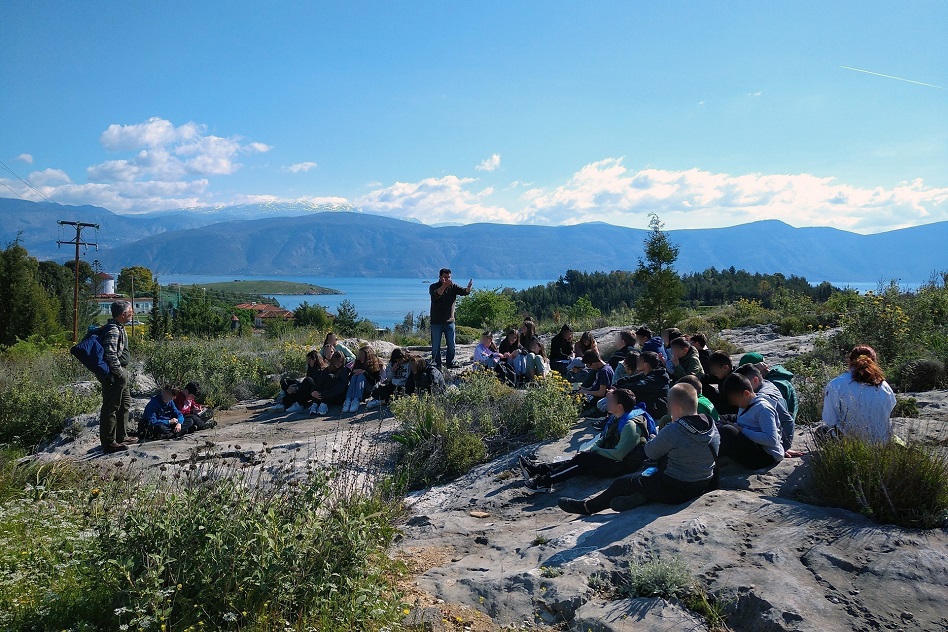
On April 9–10, 2025, the 6th-grade students of the 1st Primary School of Rafina participated in a two-day educational visit to the Environmental Education Center of Amfissa (KEPEA Amfissa) as part of their involvement in the European Erasmus+ project PARCCE. This action was designed and implemented with the essential contribution of the KEPEA Amfissa pedagogical team, embracing a holistic school approach that connects classroom learning with outdoor field experience and local community engagement.
The educational program incorporated key concepts from both Education for Sustainable Development (ESD) and Climate Change Education, addressing themes such as natural systems, social responsibility, and cultural awareness. At the same time, diversity and inclusion were actively promoted, ensuring that all students participated equally in collaborative, experiential activities designed to foster civic engagement and teamwork.
The visit was further enriched by aligning the school’s curriculum unit “Exploring the Sky: Weather vs Climate Change” with KEPEA’s thematic programs, particularly “Water Resource Management in Urban Ecosystems – The Mornos Canal”. This interdisciplinary connection allowed for the integration of scientific observation, environmental awareness, and cultural understanding in a single learning journey.
From Theory to Practice: Inquiry and Scientific Thinking
The KEPEA Amfissa team — Giorgos Kottis, Kalotina Skotti, with the scientific support of Dr. Michalis Theocharopoulos, the collaboration of Vassilis Psallidas (MIO-ECSDE/MEdIES), KEPEA Director Dr. Sarantis Chelmis, and the school’s teaching staff — designed a comprehensive two-day program that combined experiential, participatory, and inquiry-based learning in real-world environments.
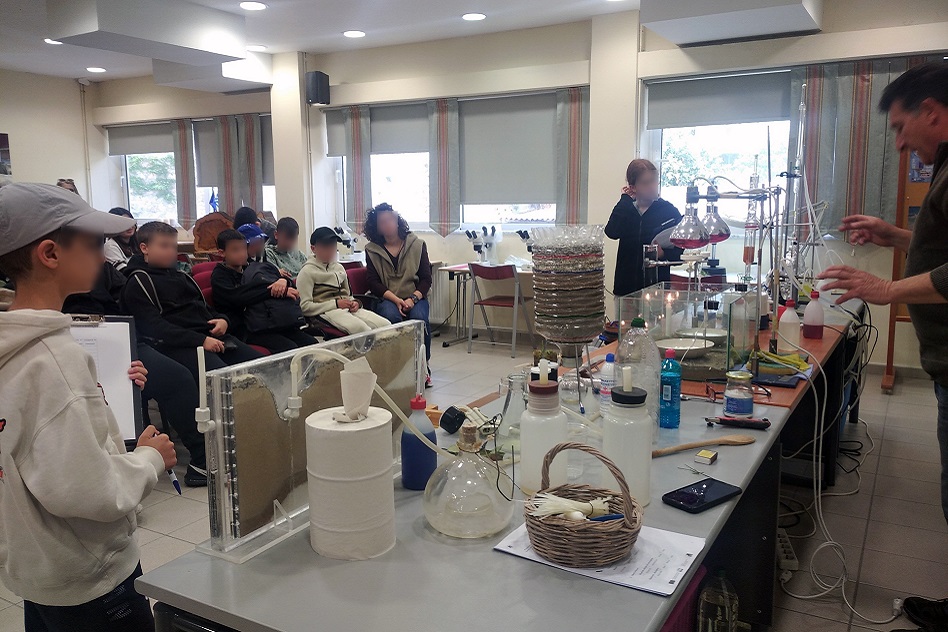
The visit began with a hands-on scientific simulation in the KEPEA lab, where students explored the greenhouse effect using increased CO₂ levels. The tangible observation of temperature rise sparked meaningful discussions and helped students make clear connections between human-induced emissions and climate change. This foundational experience became a catalyst for further inquiry and strengthened students’ ability to engage in evidence-based scientific reasoning.
Education in the field: The Garden of Aromatic and Medicinal Plants
A highlight of the visit was the pedagogical use of the Garden of Aromatic and Medicinal Plants, a living outdoor laboratory for examining:
- the biological and ecological role of native species as habitats and food sources for local fauna;
- their adaptation mechanisms to fire and drought conditions;
- their place in ecological succession and restoration of degraded landscapes; and their contribution to combating desertification and promoting sustainable resource management.
This module served as a strong foundation for developing targeted environmental education projects that bridge science, nature, and culture.
Comparative Ecosystem Study: From Shrubland to Forest – Landscape interpretations
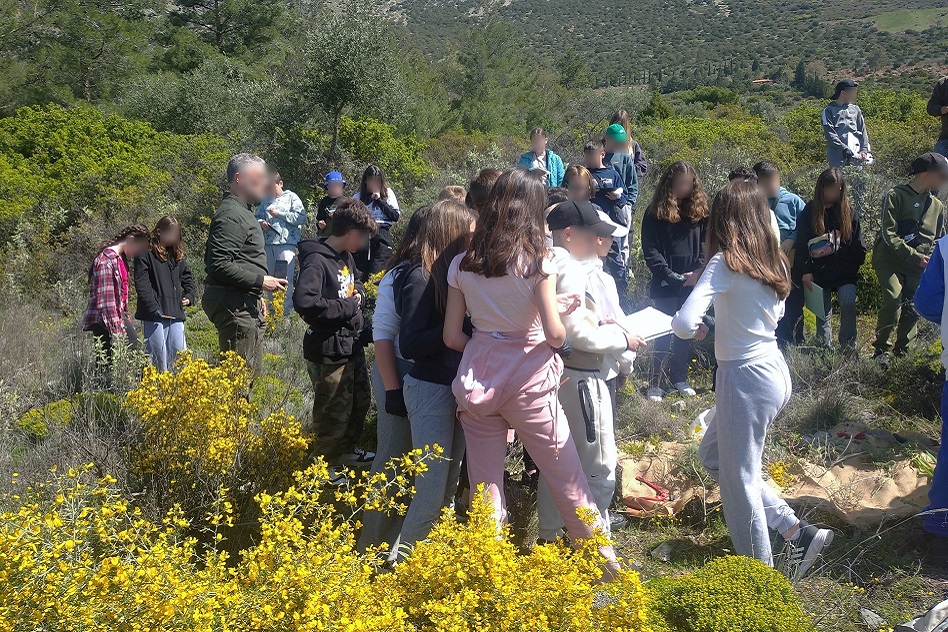
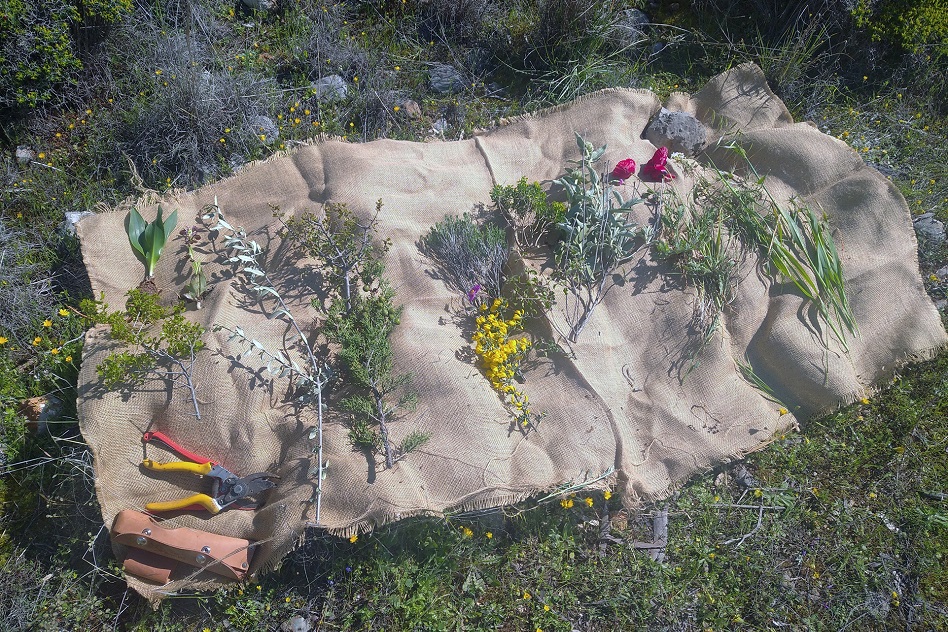
The field component continued with a comparative ecological investigation of two Mediterranean ecosystems: the shrubland in Chryso (Fokida) and the mixed forest ecosystem in Galaxidi. In Chryso, students recorded microclimate data (temperature, humidity, wind), collected plant samples (e.g., Phlomis, Cistus, Euphorbia), and analyzed adaptive characteristics such as leaf hairiness, reduced transpiration surfaces, and seasonal leaf morphology.
In Galaxidi’s forest, students carried out comparative analysis of biodiversity, ground cover, and human impacts (trails, infrastructure). Key discussions centered on pedogenesis—the long-term process of soil formation—and the consequences of desertification, including vegetation loss, diminished ecological function, and increased flood risk.
Culture and Climate: Urban Resilience in Traditional Architecture
The visit concluded with a walking exploration through Amfissa and Galaxidi, where students investigated the relationship between traditional architecture and local climate adaptation. They examined how natural materials, orientation, courtyards, and building forms contribute to microclimate regulation and energy efficiency. The exploration also included topics in urban ecology, water infrastructure, and climate resilience in city planning.
Educational Impact and Regional Significance
This immersive experience highlighted the pivotal role of KEPEA Amfissa as a regional leader in Education for Sustainable Development within Central Greece. It also showcased the broader capacity of the PARCCE project to cultivate scientific thinking and environmental consciousness in students and educators alike.
Together with its partner centers — KEPEA Drapetsona, Sikyonion, and Krestena — KEPEA Amfissa contributes to building a more resilient, inclusive, and environmentally literate educational landscape, shaping the next generation of informed and empowered citizens.