Two final events, in Rome and Rispescia, will present the results, tools and new methodologies developed through an important Erasmus+ project involving Italy, Greece, France and Cyprus. At the heart of the initiative is climate education, combining augmented reality, hands-on activities and training for teachers and educators.
The climate crisis is no longer an issue that can be confined to science textbooks or special environmental awareness days. Understanding its scale and, above all, developing the tools needed to address it requires an educational approach that brings together scientific knowledge, direct experience, participation and new technologies.
This is the starting point of PARCCE – Physical and Augmented Reality for Climate Change Education, the Erasmus+ project which, over three years, has developed a shared approach across Cyprus, France, Greece, Italy and to bring climate change into schools through innovative and accessible educational tools.
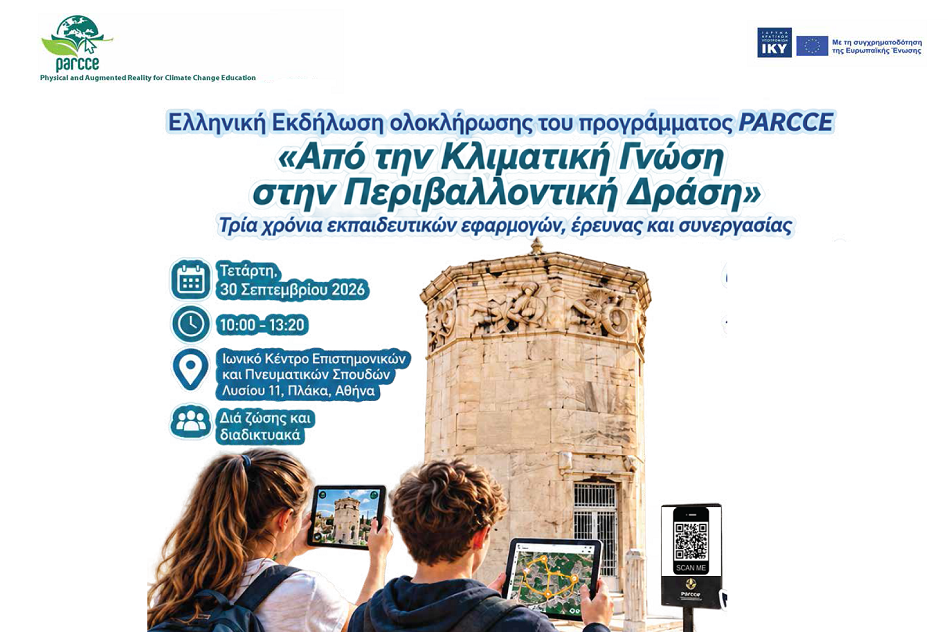
The project is now reaching its final stage with two events taking place in Italy on 12 and 13 October. The first day will be held in Rome, at the Esperienza Europa – David Sassoli centre in Piazza Venezia, with the final conference dedicated to the project’s results. The following day, the Legambiente Environmental Education Centre in Rispescia, in the Grosseto area, will host the final dissemination seminar, aimed in particular at schools, teachers, educators, partners and organisations working in the field of Environmental Education (EE) and Education for Sustainable Development (ESD).
Coordinated by the Mediterranean Information Office for Environment, Culture and Sustainable Development (MIO-ECSDE), the project brought together a partnership of educational institutions, universities, schools and non-governmental organisations from the four participating countries. In Italy, a central role was played by Legambiente Festambiente APS and Istituto Comprensivo Grosseto 4.
Over the past three years, PARCCE has focused on an increasingly urgent question: how can climate change be made understandable, tangible and relevant to the everyday lives of young people?
The answer has come through the development of Τraditional and Innovative/interactive educational materials (TEM & IEM), training programmes for teachers and educators, and activities tested directly in schools. A significant part of the project has focused on the use of augmented reality and digital tools such as Blippar and ActionBound, alongside gamification and environmental/ outdoor education activities.
The result is a set of tools designed to support teachers and non-formal educators in addressing some of the most important challenges linked to the climate crisis: from the causes and impacts of global warming to extreme weather events, from reducing our climate footprint and supporting sustainable mobility to considering the relationship between food, territories and climate change in making our choises. The activities have been designed not only to promote knowledge, but also to encourage critical thinking and cooperation as well as in enhancing the ability to identify aprpropriate solutions.
Among the resources developed by the project is the Educators’ Toolkit, designed as a practical guide for bringing climate education both inside and outside the classroom. The programme incorporates the principles of education for sustainable development, climate change education, the whole-school approach and inclusive education.
The aim, therefore, is not simply to teach what is happening to the climate. It is to create the conditions for young people to understand the phenomena they observe around them, connect them to transformations at all levels (from global to local), recognise that both individual and collective choices are significant in addressing the climate crisis and encourage them to adopt a responsible behaviour .
This approach, in Italy, offered an important first opportunity for exchange through the fruitful collaboration with Istituto Comprensivo Grosseto 4 and the support of its headteacher, Anna Maria Carbone. The PARCCE programme was delivered both in the classroom and at the Legambiente Environmental Education Centre in Rispescia, involving hundreds of students. Through workshops, outdoor activities and educational tools, students had the opportunity to explore climate awareness and sustainability, experiencing a practical, participatory approach focused on understanding environmental challenges and shaping appropriate responses.
The Coordinator of PARCCE, Prof. Scoullos, stressed that: “The PARCCE Erasmus+ project was collectively designed, developed and implemented as a fundamental, but easy to apply, tool for explaining the climate change and its consequences, in view of strengthening, through formal, non-formal and informal education, the needed beghavioural transformation of the society, starting from the school. It has become a flagship of the Mediterranean Committee on Education for Sustainable Development and its educational material, which is already available in English, French, Italian and Greek, is translated in Arabic, through the EU project WES-BCA and disseminated in the Eastern and Southern coast of the Mediterranean”.
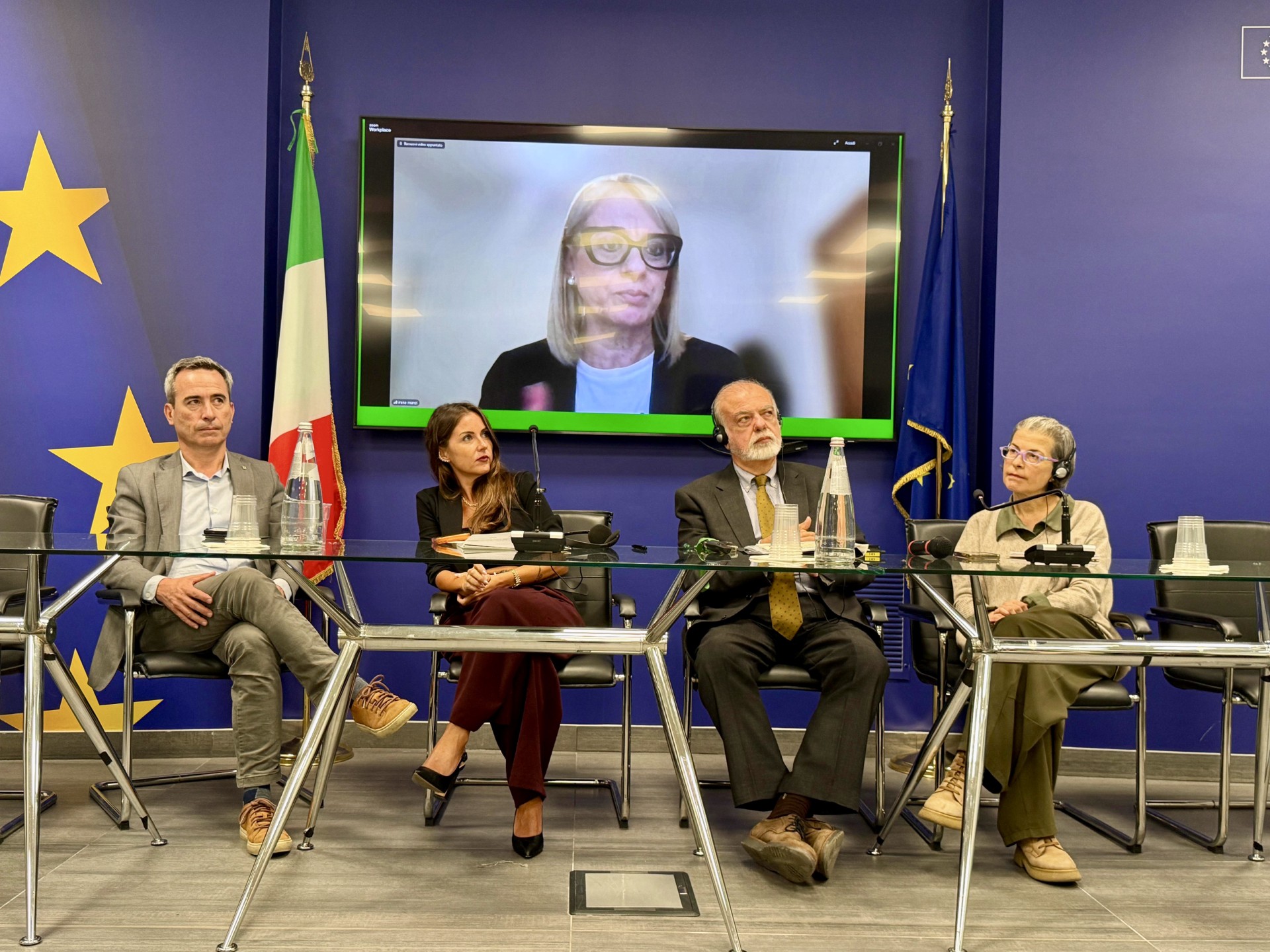
The European project concludes with a final phase that already looks beyond its formal completion. On 12 October in Rome, the results and future perspectives of PARCCE will be presented, with contributions from representatives of European institutions, the education sector, research and international partners. On 13 October in Rispescia, the focus will shift to the practical dimension, with the presentation of the Toolkit, demonstration activities and discussions with educators and schools.
The project’s partners will also share their experiences, presenting the materials and methodologies they have tested in their respective educational contexts and showing how climate education can take different forms depending on the territory, while addressing a common challenge: making scientific knowledge understandable, engaging and capable of generating awareness.
If the climate crisis is changing the way we experience and live in our territories, it is also changing the way we need to address it, reducing our emissions and adapting to it. This is a necessary transformation and schools, can be the places where this transformation begins.
Find out more: www.parcce.eu
Project partners: The Mediterranean Information Office for Environment, Culture and Sustainable Development (MIO-ECSDE) (Lead Partner), University of Crete – Department of Primary Education / e-Learning Lab, 1st Rafina’s Primary School, Pedagogical Institute – Ministry of Education, Culture, Sport & Youth, Pernera Primary School, Legambiente Festambiente APS, Istituto Comprensivo Grosseto 4, U Marinu – CPIE Bastia Golo Méditerranée, Montesoro College. Associated Partners: DOUKAS Primary Private School and 1st Experimental Primary School of Pyrgos.